Havelock Wool · Insulation
Insulation Sample Kit
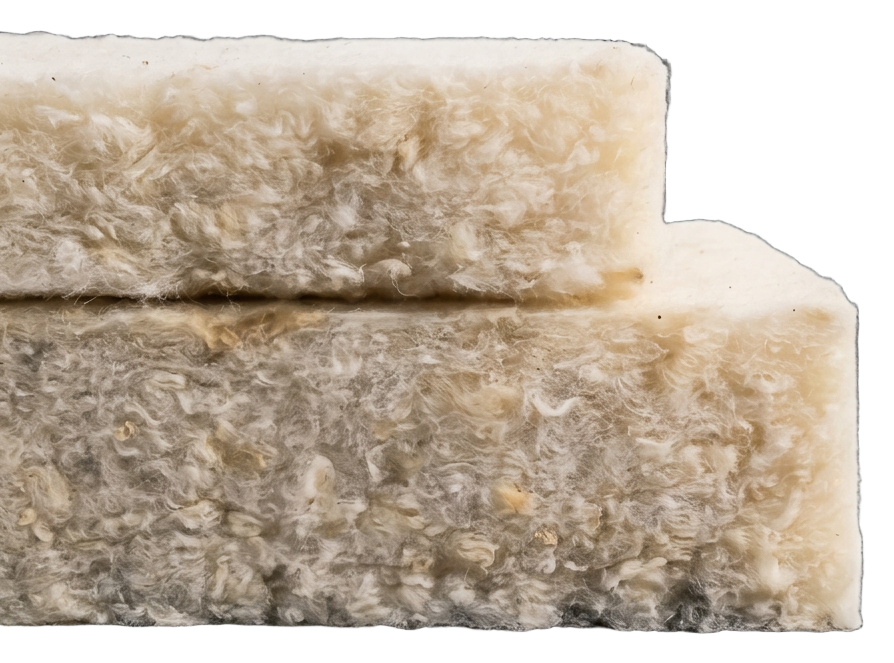
For anyone deciding whether wool is right for a project: the Sample Kit lets you see, touch and feel the difference natural wool insulation makes before you commit.
- Applications
- Specification, Material review, Sample boards
- Properties
- Bio-based, Renewable
- Price
- $20
- Contents
- Batt and loose-fill samples
Uses+
Specification and material review
Sample boards and material libraries
Client and contractor conversations
Why it works?+
Wool actively manages moisture: the fibre absorbs and releases water vapour from the surrounding air, buffering humidity inside the assembly instead of trapping it. Its crimped structure traps still air for thermal performance and dampens sound transmission through the wall.
Wool also chemically bonds with formaldehyde and other VOCs, pulling them out of interior air rather than re-emitting them, and it does not off-gas or shed microfibres the way synthetic insulation can.
It is safe to handle without gloves, goggles or a mask, will not itch, and can be left exposed in a space while a build is underway. Batts are friction-fit into stud bays and trimmed with a straight blade.
Products are tested for flame spread and smoke development and carry USDA Certified Biobased Product status.
Sustainability Details+
Renewable, biodegradable protein fibre, shorn from sheep as part of routine annual care
USDA Certified Biobased Product
The fibre stores biogenic carbon captured by the pasture while the animal grazed
Wool is sourced from New Zealand flocks, where it is cleaned and graded to professional building-product standards
Low-energy processing at Havelock's own facility in Nevada, without chlorine bleaching
No synthetic resins, no fiberglass, no added VOCs
About Havelock Wool+
Havelock Wool was founded in 2013 by Andrew Legge, who came to wool as an insulation while building a house in New Zealand. The company set out to offer a non-toxic, high-performance alternative to the synthetic insulation that had become standard.
Wool is sourced in New Zealand, then run through a deliberately light-touch process at Havelock's own facility in Nevada and packed into a small range of SKUs — loose fill, PRO batts, acoustic panels, air filters and van insulation.
The company reports more than 100,000 homes served, and publishes its coverage, R-value and testing data openly.